
Third things third!
On classrooms and grading

Ciao!
How’s life? We, which still reads as Alexa and Kevin, are generally happy and enjoy our time here. It’s actually halftime of our stay abroad – which feels very unreal, to be honest. Same beginning as always, here is an extension of our (quote unquote) pros and cons:
“Cons”
Excluded taxes on price tags
It’s nice to see cheap prices, but paying is gruesome due to the addition of taxes… for the sake of transparency (and avoidance of rapid mathematics), we look forward to German shopping experiences again ;)
“Sweatpants and pajamas”-culture
Sometimes, we feel overdressed with jeans…
“Pros”
Sunsets
The more intense the better! All the sunsets we’ve seen so far really amazed us in the best way. What would we give to be at the coast…
Classrooms (to be continued below)
The classrooms tend to be so much more welcoming and comforting here. This is the focus of one fragment below.
Loveliness of all the people around
This is no exaggeration – until now, it appears that EVERY person we’ve met until now is kind, interested, and so welcoming. Be it conversations about their dogs (remember, we don’t know these people), accurate descriptions of ways, or just a brief conversation, a genuine smile, and a cute attempt at speaking German when ordering coffee.
Actually, we need to come back to our post on lab work: this might have been a special day, but further observations of different science classes showed that there tends to be an amplified notion of safety in the lab. We’re relieved.

One aspect I (Kevin) would love to talk about is the aforementioned design of classrooms. Knowing a bit about Rosa’s resonance pedagogy, the classroom as a personal and safe space immediately caught my attention. I spend most of the time in the classroom of my mentor teacher, who teaches English Language Arts. And what can I say: I can imagine myself having such a room. On the one hand, it resembles the personality of the teacher (who apparently loves anglophone literature): posters of Frankenstein, many allusions taken from Shakespeare plays, and shelves filled with books (I’ve seen a nice edition of Wuthering Heights, FYI), to name a few characteristics. On the other hand, however, it is so inviting for the students to settle in and feel comfortable in this safe space. There are couches and carpets to find some peaceful moments, and there is a large number of products created by students in the room – which really emphasizes how much the teacher honors their students. Her relationship with her students is omnipresent in this room – I enjoy every second I spend there. I know that we talk about perturbation in foreign school settings, and many people connote perturbations negatively. But this experience is a perturbation for me and Alexa, but one that couldn’t be more pleasant. Regarding classes, student participation seems very much facilitated by the interior design. Hypotheses and thoughts are shared without anxiety, students know how to help themselves by consulting other literary works, and their working habitus seems to be both relaxed and efficient at the same time. I’m aware that the heterogenous group of learners as well as the performance of the teacher play a significant role as well, but it feels as if the room has a severe impact on school life.
By the way: we’ve attended our first UNC basketball game and LOVED it. Inspired by an unbelievably fantastic performance of “Sweet Caroline,” check out this clip to get a feeling of the spirit.
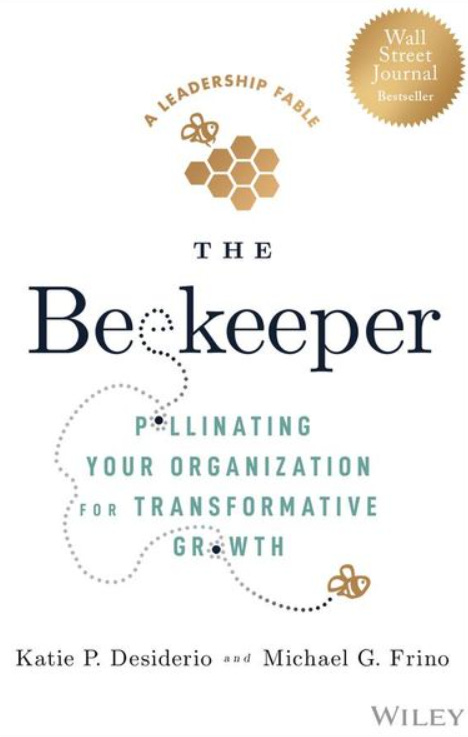
At this point, we think it is the right time for our book recommendation. We’ve seen The Beekeeper: Pollinating Your Organization for Transformative Growth during our Durham trip – and felt the urge to share it with you all!
Let’s get back to another fragment, which concerns the testing culture in the USA. I (Alexa) was very surprised by the many multiple-choice quizzes (confirmed by Kevin as well) and the “random” ways of selecting students to test their knowledge in front of the class. I do see the charm of multiple-choice quizzes, as they’re an efficient way of testing knowledge (and easy to grade). I learned that oral participation is not graded in contrast to Germany, and I can partially see why teachers choose this type of assessing knowledge, but here are three questions I wonder about the most:
Can multiple-choice quizzes test comprehension and understanding sufficiently and satisfactorily?
How emotionally pressuring are those quizzes for the students?
Might the student’s motivation be lacking if the only in-class participation is happening when their name is being drawn from a cup containing popsicle sticks?
And then there are the retakes to spice up one’s grade again…and again...
I don’t think that German grading is flawless at all (!!!!!). Nor do I believe that it is a good idea to determine students’ written grades by correcting two exams per semester. However, the students at my school placement can’t score less than 50/100 if they don’t turn anything in, and they can retake tests as often as they like. I wonder if this results in students simply not caring because the stakes are so low... maybe this is just my inner control freak acting up again, but I feel like both systems appear to be deeply flawed (Germany AND the USA). I do like the option that students get another chance on a graded assignment because it allows them to learn from their mistakes and to do better the second time around. Unlimited retakes, however, seem like too much additional work on the teacher’s behalf if I’m brutally honest.
Alrighty! Those were two other fragments. The next time, we’ll report about teaching experiences here in the US (uncertainty will be our focus then) – which we’re already super excited about!
Today’s takeaways:
Make yourself feel at home: you and your students spend a lot of time (together) in your classroom. Whenever it is possible, try to change the space for learning for the better.
Learn the lyrics of “Sweet Caroline” by heart to be prepared for your next UNC game. GO TAR HEELS, GO!
Be open to questioning your grading habitus and think about smaller adjustments to students’ needs.
Have a good rest of the day – and hear from us again by the end of the week!
Yours,
Alexa and Kevin
P.S. Our quote by Neil Diamond:
Was in the spring
And spring became the summer
(Literally: yes. It’s supposed to be winter here, but it’s actually spring/summer.)